



- 23 Apr 2026
- Comments (0)
Bhrigu Lake Trek: Discover the Hidden Alpine Beauty of Manali
Nestled in the Kullu Valley near Manali, Bhrigu Lake is a high‑altitude glacial lake that feels like a secret world of mirror‑like water, rolling meadows, and snow‑clad summits. The trek to Bhrigu Lake is graded easy to moderate, usually completed over 10–11 days, making it perfect for first‑time trekkers as well as seasoned hikers looking for a compact Himalayan experience. Whether you join a guided group like Yuvashakti’s Manali – Bhrigu Lake adventure or plan independently, this route consistently ranks among the best short treks out of Manali.
Book your adventure now: https://yuvashakti.org/manali-bhrigu-lake
Why Bhrigu Lake Is a Hidden Gem
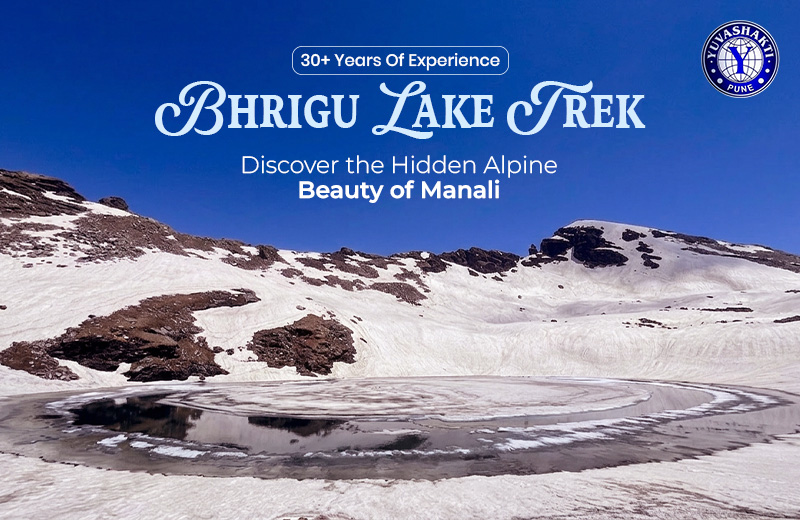
What sets the Bhrigu Lake trek apart is its combination of accessibility and raw alpine beauty. The base‑camp drive starts from Manali to Gulaba, then to Rola Kholi or similar high‑altitude campsites, after which you climb into the zone of seemingly endless meadows and panoramic mountain views. At around 14,000 feet (4,300 m), the glacial lake reflects peaks such as Deo Tibba and Indrasan, creating mirror‑like scenes that rarely appear in crowded tourist photos.
The trail itself passes through dense forests, grassy slopes, and stretches of rocky and snow terrain, giving you a condensed taste of the greater Himalayan landscape in just a few days. For many trekkers, Bhrigu Lake is considered the “hidden alpine beauty” of Manali because it remains less crowded than more famous routes such as Hampta Pass or Beas Kund, yet offers comparable views and a strong sense of solitude.
Bhrigu Lake Trek itinerary
Day 1: Pune → Delhi
Departure for Delhi by 12629 / 22685 Sampark Kranti Express from Pune Railway Station at 9 am. Overnight train journey.
Day 2: Delhi → Nagar Base Camp
Arrival Delhi at 1.30pm and transfer to Hotel for a quick fresh up. Proceed to Naggar Base Camp by Volvo at 5 pm. Overnight bus journey.
Day 3: Naggar Base Camp → Naggar Base Camp
Arrival Naggar Base Camp & transfer to Base Camp. Enjoy a short acclimatization walk in the evening to explore the rich heritage of the surrounding areas.
Day 4: Naggar Base Camp → Morigugh
Trek Day - Naggar Base Camp to Kuhlang Drive and trek to Moridugh (2500m) – After an early morning breakfast, we take a small drive to Kuhlang Village (30 minutes) and start our trek to Moridugh which is an easy ascent, Overnight Camp at Moridugh.
Day 5: Moridugh → Bota Dugh
Trek Day - Moridugh to Bota Dugh (3200 m) – The day starts with an easy ascent with gradual climb through forest and meadows. Start of the trek is flat and further becomes steep with a climb of roughly 1-2 hours. The trek route is beautifully carved through meadows and forests. We have to cross a small river on the way. We will halt for lunch enroute(pack lunch) and proceed to Bota Dugh for an overnight halt
Day 6: Bota Dugh → Bota Dugh
Trek Day - Bota Dugh to Pandurupa – Today we visit this fascinating place and explore the landscapes of this breathtaking region. After spending a quality time in this place, we retrace our steps back to Bota Dugh for the night halt.
Day 7: Bota Dugh → Bhrigu Lake - Bota Dugh
Trek Day - Bota Dugh to Bhrighu Lake (4277m) and return to Bota Dugh Camp – Post an early breakfast, we start for an early morning walk with pack lunch and head for Bhrighu Lake. The trek route covers over the meadows of Bhrigu Lake range and alpine forests filled with Oak and Birch trees. Lunch enroute and return to Bota Dugh camp for the night halt.
Day 8: Bota Dugh → Naggar Base Camp
Trek Day - Bota Dugh to Naggar Base Camp - Today the trek will be more of a downhill walk till the base camp Naggar through Vashisht Village, overnight halt at Naggar.
Day 9: Naggar Base Camp → Delhi
Optional sightseeing tour of Manali town or rafting adventure and departure for Delhi by bus in the evening. Overnight bus journey.
Day 10: Delhi → Pune
Arrival at New Delhi at 8 am at Hotel Sunshine, Karolbagh and proceed to Pune by train no 11078 Jhelum Express. Overnight train journey.
Day 11: Pune → Pune
Arrival at Pune Railway Station 4 PM.
Best Time to Trek to Bhrigu Lake
The ideal months for the Bhrigu Lake trek are generally May–June and September–October.
May–June (post‑winter snowmelt)
Trails are often still partly snow‑covered, especially at higher altitudes, but the meadows burst into color with wildflowers.
Skies are usually clear, and temperatures are cool enough for comfortable trekking during the day while still cold at night.
September–October (post‑monsoon)
The monsoon (July–August) is best avoided due to rain, muddy trails, slippage, and reduced visibility.
After the rains, the air is crisp, views are sharp, and the landscape appears washed‑clean and vibrant.
Winter months (December–April) can be attempted only by experienced trekkers with proper gear and guidance, as snow and cold make the trail significantly more challenging.
Difficulty and Fitness Level Required
The Bhrigu Lake trek is commonly described as easy to moderate, suitable for beginners who are reasonably fit and have some walking experience. You should ideally be able to walk 8–12 km on relatively flat or mildly hilly terrain without exhaustion.
Key physical aspects to consider:
- Altitude gain of about 1,200–1,500 ft on the Bhrigu Lake day can cause breathlessness for some, especially at 14,000 ft.
- Short spells of steep ascent and rocky or snow‑covered paths require decent stamina and sturdy trekking shoes.
- Carrying your own daypack (2–3 liters of water, light snacks, warm layers) is recommended even if you’re using a porter.
If you’re new to high‑altitude trekking, adding an acclimatization day in Manali or choosing a guided group with medical backup can make the experience much safer and more enjoyable.
What Makes Bhrigu Lake Spiritual and Legendary
Bhrigu Lake is not just a photo‑worthy landscape; it also holds strong mythological and spiritual significance. According to local legends, the lake is believed to be the meditation site of the sage Maharishi Bhrigu, one of the great Hindu sages.
Many trekkers and pilgrims consider a visit to Bhrigu Lake as a form of spiritual cleansing or a way to reconnect with nature and silence. The stillness of the glacial waters, the absence of crowds, and the surrounding wilderness enhance this meditative atmosphere, making the trek feel like a quiet pilgrimage rather than just a physical challenge.
Pack List and Safety Tips
A well‑planned pack list goes a long way in ensuring comfort and safety on the Bhrigu Lake trail. Essentials typically include:
- Sturdy waterproof trekking shoes with good grip
- Warm layers (thermal inner, fleece, down jacket), especially for nights
- Rainwear (poncho or light jacket)
- Sun protection (cap, sunglasses, sunscreen)
- 2–3 liters of water per person, plus purification tablets or a filter
- Snacks (nuts, energy bars, chocolates)
- Basic first‑aid kit and personal medication
Safety‑wise, it’s important to:
- Walk at a steady pace and avoid rushing uphill.
- Stay hydrated and avoid alcohol at high altitude.
- Follow your guide’s instructions on altitude‑sickness signs (headache, nausea, dizziness) and when to descend.
Choosing a reputable organizer such as Yuvashakti, which offers guided Manali – Bhrigu Lake trips, can simplify permits, logistics, and emergency support. Always check that your operator provides proper tents, sleeping bags, hot meals, and a trained guide before booking.
Conclusion
The Bhrigu Lake Trek is a hidden alpine gem near Manali that perfectly blends adventure, natural beauty, and spiritual significance. Whether you're chasing mountain views, seeking peace, or craving adventure, this trek delivers it all.
Start planning your Himalayan escape today and discover the magic waiting at Bhrigu Lake!
Frequently Asked Questions (FAQs)
1. How difficult is the Bhrigu Lake trek?
The Bhrigu Lake trek is generally rated easy to moderate, lasting about 3–4 days with a total round‑trip distance of roughly 20–26 km. It’s suitable for beginners who are reasonably fit and comfortable with uphill walking, especially at altitudes around 14,000 ft.
2. What is the best time to do the Bhrigu Lake trek?
The best months are May–June for flower‑filled meadows and September–October for clear skies and post‑monsoon freshness. July–August is usually avoided due to heavy rains and unstable trails, while winter months demand mountaineering‑level preparation unless you are highly experienced.
3. Do I need prior experience for this trek?
Prior high‑altitude experience is not mandatory, but some basic fitness and walking experience are recommended. Many groups include an acclimatization day in Manali or nearby, and guided tours provide support for beginners, making the trek accessible even for first‑time trekkers.
4. What kind of views can I expect at Bhrigu Lake?
From the lake, you see a mirror‑like alpine sheet surrounded by meadows, snow slopes, and towering peaks such as Deo Tibba and Indrasan. The panorama is especially dramatic at sunrise and sunset, when the reflections in the glacial water turn gold and pink.
5. How do I reach the start of the Bhrigu Lake trail?
Most journeys begin in Manali, from where you take a short drive (about 20–22 km) to Gulaba, the trek starting point. From Gulaba you trek to Rola Kholi or a nearby campsite before ascending to Bhrigu Lake the next day. Public transport and local taxis are available from Manali to Gulaba, and many trekking groups provide pick‑up and drop services.


(0) Comments