



- 23 Jul 2026
- Comments (0)
Top 10 Highlights of the Everest Base Camp Trek
The Everest Base Camp (EBC) Trek is more than a walk in the mountains — it is a pilgrimage to the foot of the world's highest peak. Every year, thousands of trekkers from across the globe lace up their boots and set off from Lukla, chasing the dream of standing where legendary mountaineers once stood before their summit attempts. Whether you're an experienced trekker or someone building up to your first major Himalayan expedition, the EBC trail delivers an unmatched mix of natural beauty, culture, and personal challenge.
If you're planning this trek with an experienced trekking organization like Yuvashakti, here are the top 10 highlights that make the Everest Base Camp Trek a true bucket-list adventure.
Quick Facts: Everest Base Camp Trek
- Trek duration: 12–15 days (Kathmandu to Kathmandu)
- Highest point: Kala Patthar, 5,545 m (18,192 ft)
- Base Camp elevation: 5,364 m (17,598 ft)
- Difficulty level: Moderate to difficult
- Starting point: Lukla, via a scenic flight from Kathmandu
- Best seasons: March–May (spring) and September–November (autumn)
- Trail region: Khumbu Valley, Sagarmatha National Park, Nepal
- Culture: Sherpa villages, Buddhist monasteries, and prayer-flag-lined trails
1. The Thrilling Flight to Lukla
Your EBC journey begins with a short but exhilarating flight from Kathmandu to Lukla, home to Tenzing-Hillary Airport — often ranked among the world's most dramatic airstrips. Perched on a mountainside at over 9,300 feet, the landing itself is a highlight, offering your first breathtaking glimpse of the Khumbu region's snow-capped peaks.
- One of the world's most thrilling short-haul mountain flights
- Landing strip sits at 9,334 ft with a mountainside runway
- First close-up views of the Khumbu peaks begin here
2. Namche Bazaar, the Gateway to Everest
Namche Bazaar is the vibrant Sherpa capital and the trek's most important acclimatization stop. This bowl-shaped town, built into the mountainside, is packed with bakeries, gear shops, cozy lodges, and teahouses serving everything from momos to apple pie. It's also where trekkers get their first real view of Mount Everest peeking through the ridgeline.
- The cultural and commercial hub of the Khumbu region
- Key acclimatization stop before higher altitudes
- Bakeries, gear shops, and teahouses line the town
- First distant glimpse of Mount Everest
3. Panoramic Views of Everest, Lhotse, and Ama Dablam
As the trail climbs higher, the Himalayan giants reveal themselves one by one. The pyramid-shaped Ama Dablam is often called the most beautiful peak in the world, while views of Everest, Lhotse, and Nuptse from viewpoints like Everest View Hotel and Tengboche will stay with you long after the trek ends.
- Ama Dablam, widely regarded as the Himalayas' most photogenic peak
- Views of Everest, Lhotse, and Nuptse from multiple viewpoints
- Everest View Hotel offers one of the trek's best panoramas
4. Tengboche Monastery
Set on a ridge with Everest as its backdrop, Tengboche Monastery is the spiritual heart of the Khumbu region. Trekkers often time their visit to witness the monks' morning or evening prayers, accompanied by the sound of horns and chanting echoing across the valley — a deeply moving cultural experience.
- The largest and most important monastery in the Khumbu region
- Framed by Everest, Ama Dablam, and Thamserku peaks
- Morning and evening prayer sessions open to visitors
5. Sherpa Culture and Hospitality
The EBC trail winds through Sherpa villages where Buddhist prayer flags, mani walls, and chortens line the path. Interacting with local families in teahouses, learning about their mountaineering heritage, and sharing meals with fellow trekkers adds a warm human dimension to the physical challenge of the trek.
- Traditional Sherpa villages along the entire route
- Buddhist prayer flags, mani walls, and chortens mark the trail
- Warm teahouse hospitality and home-cooked mountain meals
6. Crossing the Suspension Bridges
The trail is dotted with dramatic suspension bridges strung high above roaring glacial rivers, decorated with fluttering prayer flags. The Hillary Suspension Bridge near Namche is the most famous, offering a heart-pounding crossing with stunning gorge views below.
- Multiple high suspension bridges strung over glacial rivers
- The Hillary Suspension Bridge is the most iconic crossing
- Prayer flags and gorge views make for striking photo stops
7. The Khumbu Glacier and Icefall
As you approach Base Camp, the trail runs alongside the massive Khumbu Glacier, with its jagged ice formations and moraine landscapes. A little further, you'll catch sight of the infamous Khumbu Icefall — the treacherous first stage of the summit route that professional mountaineers must navigate.
- One of the largest glaciers in the Himalayas
- Dramatic ice formations and glacial moraine terrain
- Close-up views of the notorious Khumbu Icefall
8. Standing at Everest Base Camp
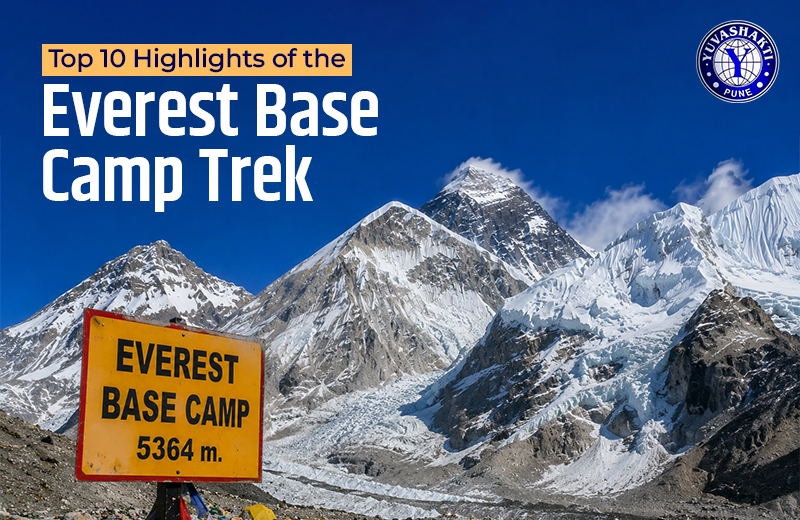
This is the moment the entire trek builds toward. Reaching Everest Base Camp (5,364 m) and standing amid colorful expedition tents at the base of the world's tallest mountain is an emotional, unforgettable achievement. During spring climbing season, you may even see mountaineers preparing for their summit push.
- The trek's ultimate destination at 5,364 m
- Colorful expedition camps during spring climbing season
- A landmark personal and physical achievement
9. Sunrise from Kala Patthar
For many trekkers, Kala Patthar (5,545 m) — not Base Camp itself — offers the true money shot. Since Everest's summit isn't visible from Base Camp, trekkers hike up before dawn to Kala Patthar for a jaw-dropping, unobstructed sunrise view of Everest's summit turning gold. It's widely considered the emotional and visual climax of the trek.
- The highest point of the trek at 5,545 m
- Best unobstructed view of Everest's summit on the route
- Pre-dawn hike timed for a golden sunrise over Everest
10. The Sense of Achievement and Camaraderie
Beyond the scenery, the EBC trek is a test of endurance, altitude adaptation, and mental grit. Walking for 12-14 days with a group, supporting each other through tough climbs and thin air, creates bonds and a sense of accomplishment that few other travel experiences can match.
- Tests endurance, altitude tolerance, and mental resilience
- Builds lasting bonds through shared daily challenges
- A profound sense of accomplishment at journey's end
Final Thoughts
The Everest Base Camp Trek is a rare combination of adventure, culture, and self-discovery. From the dramatic Lukla landing to the golden sunrise over Everest from Kala Patthar, every day on this trail offers something extraordinary. With over 35 years of experience organizing safe and well-planned Himalayan expeditions, Yuvashakti helps trekkers of all experience levels take on this legendary journey with expert guides and thorough preparation.
Ready to check this iconic trek off your bucket list? Explore Yuvashakti's Everest Base Camp trek details and book your adventure today.
Frequently Asked Questions (FAQs)
Q1. How difficult is the Everest Base Camp Trek?
The EBC Trek is rated moderate to difficult. It doesn't require technical climbing skills, but it demands good physical fitness, mental stamina, and proper acclimatization due to the high altitude, which reaches over 5,500 meters at Kala Patthar.
Q2. How many days does the Everest Base Camp Trek take?
Most itineraries range from 12 to 15 days, including acclimatization days at Namche Bazaar and Dingboche, round trip from Kathmandu via Lukla.
Q3. What is the best season to trek to Everest Base Camp?
The best times are pre-monsoon (March to May) and post-monsoon (September to November), when skies are clear and temperatures are relatively stable for high-altitude trekking.
Q4. Do I need prior trekking experience for the EBC Trek?
Prior trekking experience is helpful but not mandatory. However, a good fitness base built through regular cardio training, stair climbing, and practice treks in the months leading up to it is strongly recommended.
Q5. What is the highest point of the Everest Base Camp Trek?
Kala Patthar, at 5,545 meters, is the highest point most trekkers reach, offering the best close-up views of Mount Everest's summit. Base Camp itself sits at approximately 5,364 meters.


(0) Comments